
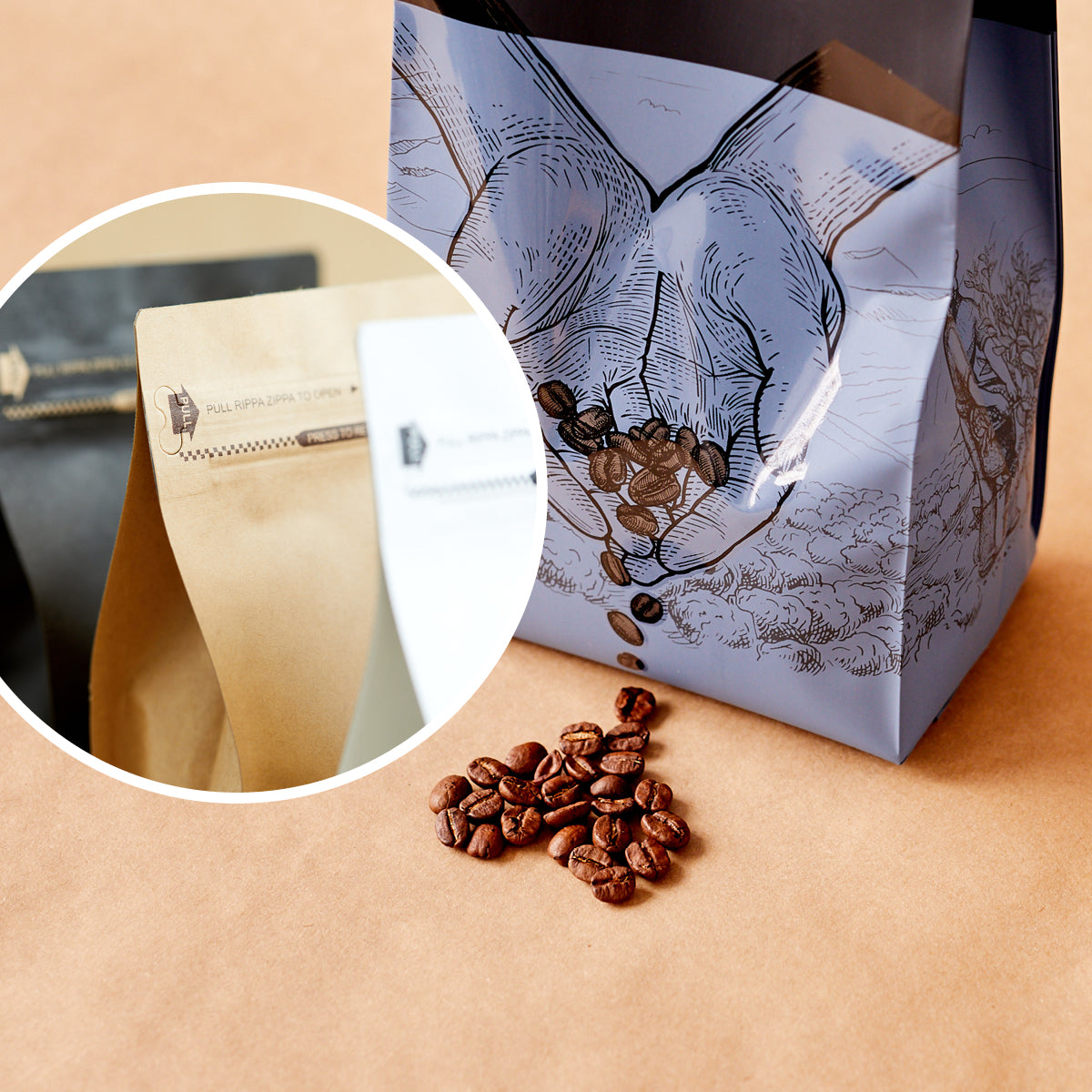
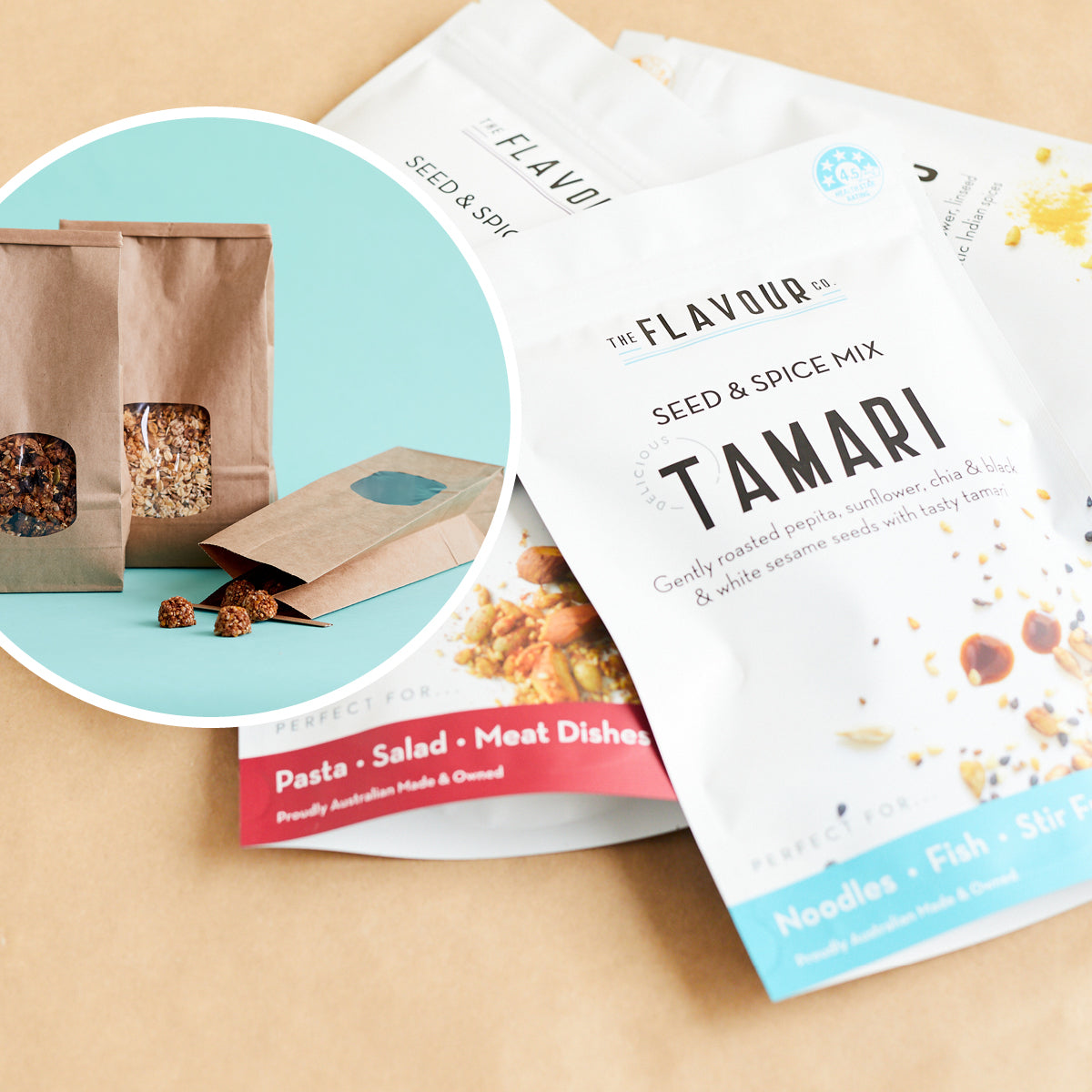
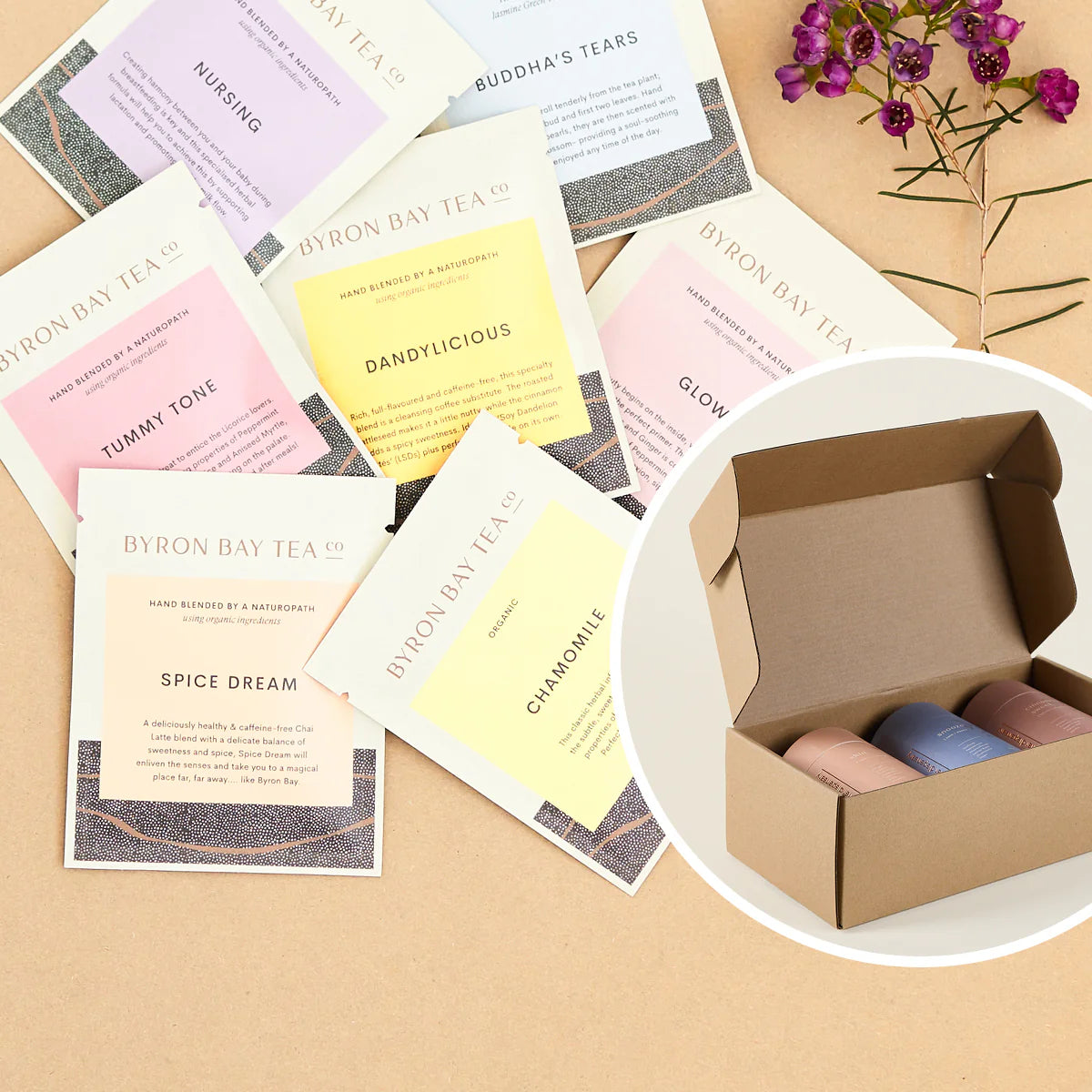
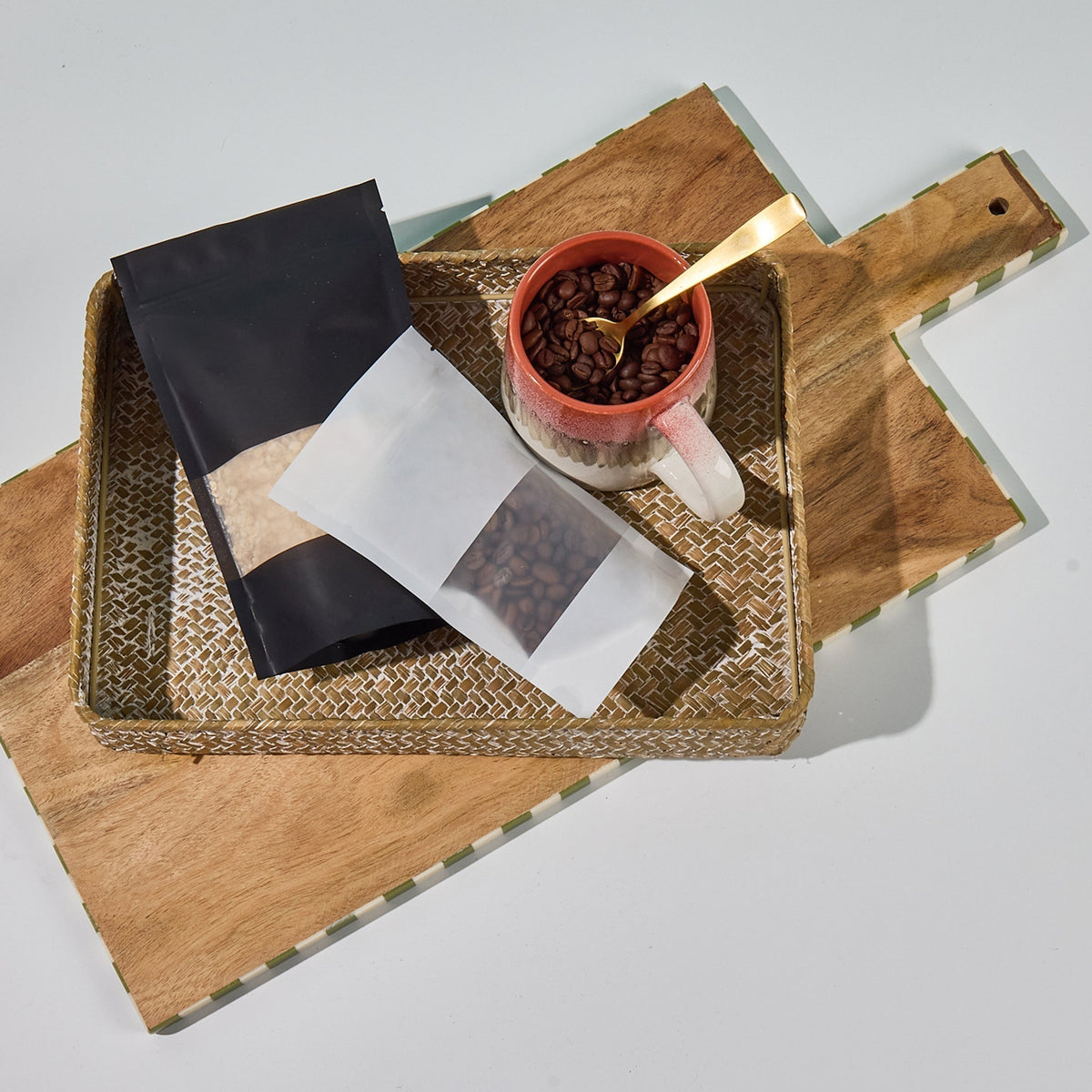
Not all stand-up pouches can be recycled through soft-plastic recycling programs in Australia. Whilst, most pouches can be technically disassembled and recycled, the reality is that there are many technical and infrastructure limitations placed on pouch recycling.
Packaging pouches made from a single type of plastic are the easiest for recyclers to handle, while pouches combining several materials are harder. The difference comes down to what the pouch is made from, and it's worth understanding before you choose one for your product, particularly if recyclability is something you want to be able to rely on rather than just print on the pack.
Why are some pouches harder to recycle?
Traditional stand-up pouches often combine several materials in one pouch, different plastics, sometimes a foil layer, a separate zip made from a different polymer again. Each material needs to be identified and separated before it can be recycled, and that separation step is where a lot of soft-plastic recycling runs into trouble.
Recycling facilities are generally set up to process a single plastic type at scale. Feed them a mix, and the sorting either must happen by hand, which is expensive and slow, or the batch gets rejected and sent to landfill instead. Mixed-material pouches simply take more effort to process, and that effort has a cost and a failure rate that a mono-material pouch doesn't carry.
Mono-material pouches solve this by using one plastic family throughout, the pouch body, the zip, and the valve if it has one. With nothing to separate, a whole pouch can go through standard soft-plastic recycling as one material stream. That's a meaningful difference for a recycler working at volume, even if it looks like a small spec change on a product page.
How soft-plastic recycling works in Australia
Australia's soft-plastic recycling landscape changed significantly after REDcycle's supermarket collection program collapsed in November 2022. REDcycle had been the main national soft-plastics scheme, run through Coles and Woolworths stores, and its collapse left a gap with no equivalent national program in place for well over a year.
Soft Plastics Stewardship Australia (SPSA) was established in August 2024 as the industry-led replacement. It's a voluntary, national scheme backed by major retailers and manufacturers, and it now runs the collection network that's rebuilding what REDcycle left behind, this time with more transparency about where the collected plastic really goes.
Soft plastics can currently be dropped off at over 700 Woolworths stores nationally, giving an estimated 70% of Australians access to a collection point. The bins accept clean, dry soft plastics carrying the "Check locally" Australasian Recycling Label, things like bread bags, chip packets and pouches, but not hard plastics, paper bags or contaminated packaging, since mixing those in can send an entire collection to landfill.
Kerbside collection is more limited. It's currently available in nine council areas across NSW, SA and Victoria, rather than nationally, following trials coordinated through the Soft Plastics Taskforce. SPSA has said it expects to expand kerbside collection more broadly over time, alongside the existing drop-off network, but for now drop-off points remain the main route for most of the country (these numbers are accurate as of SPSA's own site in September 2026).
RecycleMate is also a great resource to check current options in different regions, since coverage varies so much by postcode.
How can you tell if a pouch is recyclable?
A simple checklist for choosing a pouch:
- Is the whole pouch made from one material, including the zip and valve? A mono-material construction is what actually makes a pouch practical to recycle at scale, not just theoretically recyclable.
- Does the packaging carry the "Check locally" Australasian Recycling Label? That's what the Woolworths bins are looking for, and it signals to the customer that the packaging needs checking against local options rather than being universally accepted everywhere.
- What recycling program actually accepts it? A drop-off scheme like SPSA's, a specific council's kerbside program, or neither, are three very different answers.
- What disposal instructions should you give your customers? Vague instructions push the burden of figuring it out onto the customer, and most won't bother.
We don't just call something "recyclable" and leave it there; we explain how and where it can accurately be recycled. That's what makes the label useful rather than just reassuring, and it's also the difference between a claim that holds up and one that could be challenged as misleading.
Why we moved to single-material pouches
Australia is working toward the National Packaging Targets: 100% of packaging reusable, recyclable or compostable by 2030. The framework is overseen by the Australian Packaging Covenant Organisation (APCO). We didn't want to wait for these targets to arrive before acting, so we've been shaping our range around them.
Our earlier recyclable pouches were multi-material and were accepted through REDcycle while that program was running. When REDcycle closed, we began moving to mono-material pouches made from a single type of plastic, with the zip included, and the valve too on pouches that have one.
This wasn't a fix for a problem with our older pouches. We were getting ahead of where soft-plastic recycling was going, and matching our stock to the infrastructure being built to replace REDcycle. APCO's Sustainable Packaging Guidelines and its design guidance for soft plastic packaging point the same way: away from laminates that combine incompatible plastics like PET, PE and nylon, and toward single-polymer PE or PP structures that recyclers can actually process.
For you, this means packaging that already matches where Australian recycling is heading, without having to wait for regulation to catch up.
Our mono-material pouches differ from the originals in a few ways. They cost less, have a slightly less transparent finish with a matte, velvety texture, and don't carry a printed logo on the base. These are trade-offs that come with a simpler, single-material build, and for most brands the difference on shelf is minor compared to having a pouch that's easier to recycle.
You can spot our new stock by the REC.MONO SKU on the product page, so it's easy to check exactly what you're ordering.
What about compostable pouches?
Certified compostable pouches are another option worth knowing about, covered under AS 4736 (commercial/industrial composting) or AS 5810 (home composting). It's important to keep these separate from recyclable pouches: compostable pouches do not belong in soft-plastic recycling bins. Woolworths' soft-plastics program explicitly doesn't accept compostable packaging, since a compostable pouch behaves completely differently in a recycling stream and can contaminate the batch.
For more on what "biodegradable" and "compostable" mean, see Biodegradable plastic packaging: What actually happens to it, or look at our Bio Stand Up Pouches.
FAQs
Can you recycle laminated pouches? Yes, but only if the materials used are mono material. Traditional laminated pouches are not recyclable under APCO guidelines.
Can soft-plastic stand-up pouches go in the yellow bin? Only in the small number of council areas currently running kerbside soft-plastic collection. Outside those areas, a drop-off point (like the Woolworths bins) is the way to recycle a soft-plastic pouch, and putting one in a standard yellow bin outside those areas risks it contaminating that recycling stream instead.
Which supermarkets take soft plastics? Woolworths' program is confirmed and running nationally across 700+ stores, with hundreds of Coles and Aldi also participating.
Are compostable pouches better than recyclable ones? Neither it depends on your product, your customer's disposal options, and what's available to them locally. A compostable pouch is only a genuine improvement if your customer has access to the right composting stream; otherwise, a recyclable pouch with real drop-off access may be the more practical choice.
Explore our recyclable stand-up pouch range, and get in touch for free samples if you'd like to compare our mono-material pouches against what you're currently using.